

In Focus: Rosalyn Turner
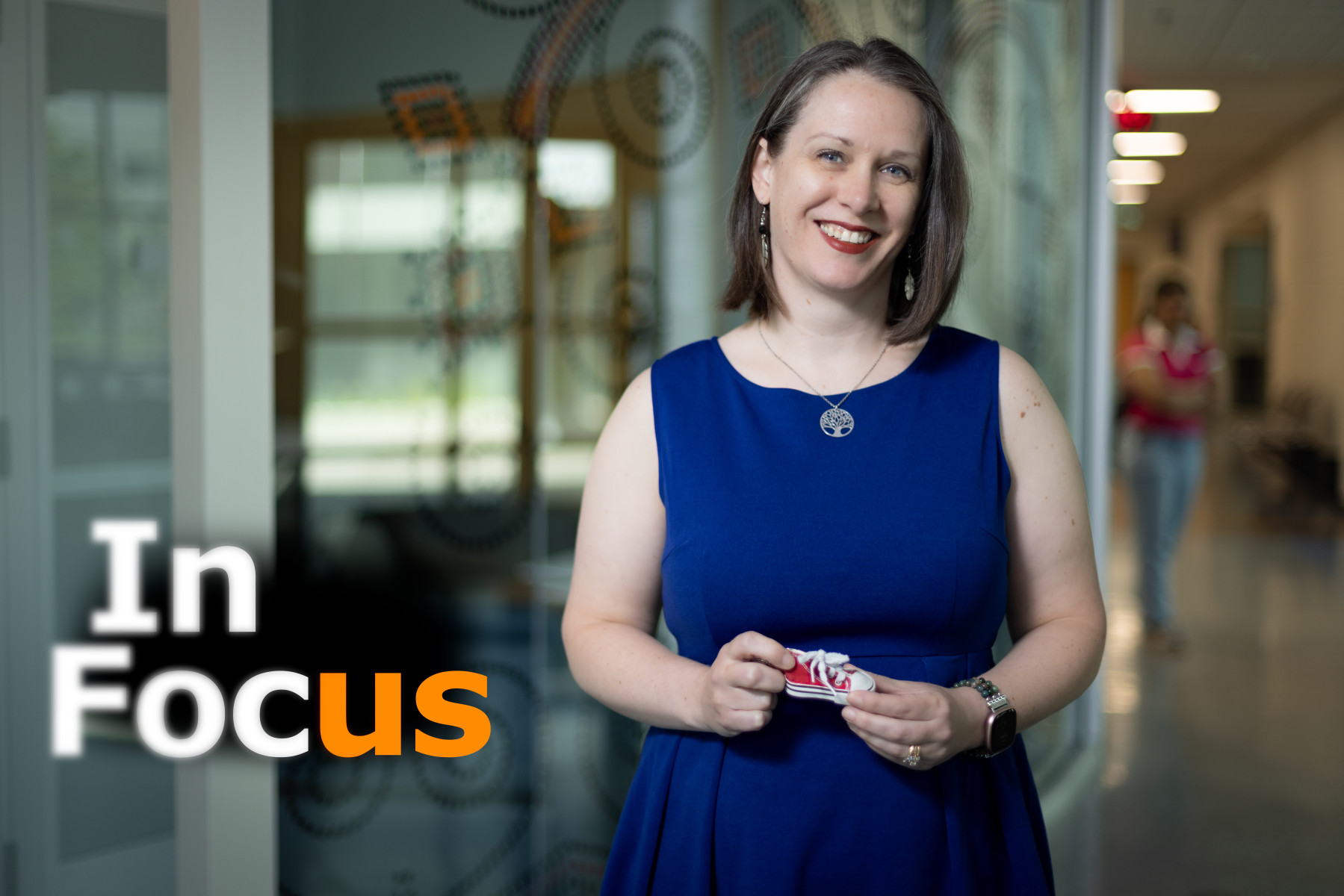
Name: Rosalyn Turner
Job title: Operations Support Officer
Department: Centre for Indigenous Relations, Knowledge & Learning (CIRKL)
How long have you been at Mohawk: 2.5 years
Tell us what you do at the college?
I support my department in completing all the projects it is connected to across the college and in the community. I supported approval and implementation of our new department name and logo, the consultation process of the Indigenous Knowledge Learning Outcomes and their ongoing implementation across programs in the college, the completion of the Kanaktí:yo space construction and grand opening event on Fennell campus and the creation of the CIRKL website.
What is the one thing that makes you want to come to work each day?
Getting to help others and learning how my CIRKL and ISS colleagues see and experience the world around them differently than me.
What is your favourite thing to do outside of work?
Going for walks in nature, hugging my family and my dog, reading and watching movies or binging TV shows.
What is something your colleagues may not know about you?
I am a settler with Irish and British heritage, who also has Naskapi and Montagnais ancestry on my father’s side. I was born and raised in Treaty 8 territory (Fort St. John, B.C.). I attended Simon Fraser University, in the unceded territory of multiple Indigenous communities (Burnaby, B.C.). I graduated with my Bachelor of Arts with a major in Psychology, minor in Criminology. I moved to the territories of the Erie, Huron-Wendat, Neutral, Haudenosaunee and Anishinaabe (Hamilton, ON) in 2002.
I struggled to find employment as I did not have any job experience related to my degree. As a result, I enrolled in the Child and Youth Worker program because of the 3 job placements included in the program. I had both of my daughters while I was attending the college as a student and graduated the program with honours.
I worked for many years in children and youth’s mental health and developmental services. I gained a significant amount of knowledge in Fetal Alcohol Spectrum Disorder (FASD) and continue to co-chair the Hamilton FASD Network.
I loved the company I used to work for and knew that if I ever left that I would be pursuing a career change. I feel fortunate that I was hired for my role at the college: Operation Support Officer, Centre for Indigenous Relations, Knowledge & Learning (affectionately called CIRKL).
I thought I knew and understood a lot about Indigenous people, but my eyes were opened wide and quickly by my new colleagues. I am grateful they have truly welcomed me into their lives, experiences, and culture. I continue to make errors and mistakes, but I have conversations, seek information, process my experiences and intentionally try to do things differently.
I really had no concept of what sovereignty was, why it is important or what treaties are until I started to work at the college. I feel I also had to really break down what truth and reconciliation was. For me, truth is believing the stories of residential school survivors, bringing awareness about that truth, and accessing facts to counter those that still deny the experiences of residential schools survivors. Reconciliation is harder. If you do a quick google search the definition of reconciliation is to “restore friendly relations”. Most of us did not have any relationships with any Indigenous people and do not know anything about their culture or history.
It is the 10th anniversary of the Truth and Reconciliation Commission’s Calls to Actions. If you have not read them, please do. I feel that everyone could find one (or more) of the calls to action they could relate to. Seek out the calls to action you are passionate about and support them by doing somethings actionable. Post information on your social media, write letters, talk to people you know, volunteer…there are many ways to move things forward.